Jules Evans – The uselessness of non-materialist theories of reality
Materialism doesn’t really explain consciousness at all — it simply ignores it, or calls it an epiphenomenon. Seeing as the only thing we know for sure is that we’re conscious, and we experience everything through our consciousness, it’s amazing that a theory that ignores consciousness and has no explanation for it has lasted this long.
Imaginal Inspirations with Wendy Ellyatt
David's guest this month is Wendy Ellyatt, a Global Thinker and Change Agent who is actively promoting regenerative systems transformation across sectors.
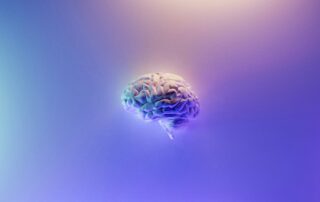
What governs the Brain? Is Neuroscience Immersive for Consciousness?
The paper develops a new road map along the axiology of consciousness-cognition-behavior for investigating brain-consciousness relationship, where the brain operates as natural, formal, informational (codal), live, and conscious system to make the unknown imaginable, imagined intelligible, intelligible possible, possible verifiable, and verifiable verified. Consciousness, on the other hand, as a non-observable and influential, supports the brain’s reflex activities, upholds habituated acts, and participates in cognitive functions. Consciousness uses the brain to make its political statements by asserting its “will”/“won’t”, in developing multisystem concurrence, creativity, and exhibiting holonomic group behavior, and leadership.
Jules Evans – The uselessness of non-materialist theories of reality
Materialism doesn’t really explain consciousness at all — it simply ignores it, or calls it an epiphenomenon. Seeing as the only thing we know for sure is that we’re conscious, and we experience everything through our consciousness, it’s amazing that a theory that ignores consciousness and has no explanation for it has lasted this long.
Imaginal Inspirations with Wendy Ellyatt
David's guest this month is Wendy Ellyatt, a Global Thinker and Change Agent who is actively promoting regenerative systems transformation across sectors.
What governs the Brain? Is Neuroscience Immersive for Consciousness?
The paper develops a new road map along the axiology of consciousness-cognition-behavior for investigating brain-consciousness relationship, where the brain operates as natural, formal, informational (codal), live, and conscious system to make the unknown imaginable, imagined intelligible, intelligible possible, possible verifiable, and verifiable verified. Consciousness, on the other hand, as a non-observable and influential, supports the brain’s reflex activities, upholds habituated acts, and participates in cognitive functions. Consciousness uses the brain to make its political statements by asserting its “will”/“won’t”, in developing multisystem concurrence, creativity, and exhibiting holonomic group behavior, and leadership.
Jules Evans – The uselessness of non-materialist theories of reality
Materialism doesn’t really explain consciousness at all — it simply ignores it, or calls it an epiphenomenon. Seeing as the only thing we know for sure is that we’re conscious, and we experience everything through our consciousness, it’s amazing that a theory that ignores consciousness and has no explanation for it has lasted this long.
Imaginal Inspirations with Wendy Ellyatt
David's guest this month is Wendy Ellyatt, a Global Thinker and Change Agent who is actively promoting regenerative systems transformation across sectors.
What governs the Brain? Is Neuroscience Immersive for Consciousness?
The paper develops a new road map along the axiology of consciousness-cognition-behavior for investigating brain-consciousness relationship, where the brain operates as natural, formal, informational (codal), live, and conscious system to make the unknown imaginable, imagined intelligible, intelligible possible, possible verifiable, and verifiable verified. Consciousness, on the other hand, as a non-observable and influential, supports the brain’s reflex activities, upholds habituated acts, and participates in cognitive functions. Consciousness uses the brain to make its political statements by asserting its “will”/“won’t”, in developing multisystem concurrence, creativity, and exhibiting holonomic group behavior, and leadership.
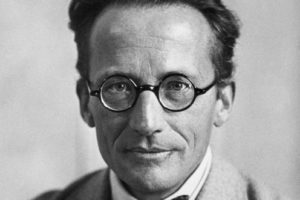
– Erwin Schrödinger
– Prof David Bohm
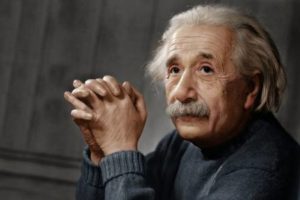
– Albert Einstein
Click on any event to view the recordings as well as event details