Why there’s no such thing as objective reality | Greg Anderson
In the grand scheme of history, modern reality is a bizarre exception when compared to the worlds of ancient, precolonial and Indigenous civilizations, where myths ruled and gods roamed, says historian Greg Anderson. So why do Westerners today think they're right about reality and everybody else is wrong? Anderson tears into the fabric of objective reality to reveal the many universes that lie beyond -- and encourages a healthy reimagining of what other possible ways of being human could look like.
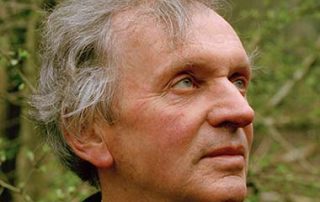
Rupert Sheldrake’s “heretical” hypothesis turns 40
The history of science is peppered with “heretics.” Galileo is a classic example, as Maddox pointed out, apparently blind to the irony. The physicist David Bohm–who was sympathetic to Sheldrake's proposal–is another: the man Einstein called his “spiritual son,” and whose ideas so perturbed Robert Oppenheimer, the “father of the atomic bomb,” that he remarked “if we cannot disprove Bohm, then we must agree to ignore him”. A recent case is the astronomer Avi Loeb, a professor of science at Harvard, whose openness to entertaining evidence of extraterrestrial intelligent life has become a subject of bad‐tempered dispute. Some heretics turn out to be right, others do not. The jury is still out on Sheldrake, Bohm and Loeb.
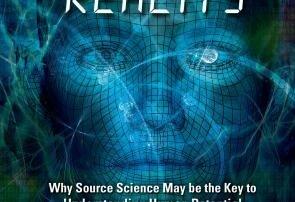
Deep Reality – Matzke & Tiller
The deep reality explored by this book combines these two ideas (QC + AI) in a conversational style between two world renowned PhD scientists. We propose that our quantum minds exist independently of and interact with our individual brains. We support this model by reviewing the research where people have directly interacted with other quantum and probabilistic systems.
Why there’s no such thing as objective reality | Greg Anderson
In the grand scheme of history, modern reality is a bizarre exception when compared to the worlds of ancient, precolonial and Indigenous civilizations, where myths ruled and gods roamed, says historian Greg Anderson. So why do Westerners today think they're right about reality and everybody else is wrong? Anderson tears into the fabric of objective reality to reveal the many universes that lie beyond -- and encourages a healthy reimagining of what other possible ways of being human could look like.
Rupert Sheldrake’s “heretical” hypothesis turns 40
The history of science is peppered with “heretics.” Galileo is a classic example, as Maddox pointed out, apparently blind to the irony. The physicist David Bohm–who was sympathetic to Sheldrake's proposal–is another: the man Einstein called his “spiritual son,” and whose ideas so perturbed Robert Oppenheimer, the “father of the atomic bomb,” that he remarked “if we cannot disprove Bohm, then we must agree to ignore him”. A recent case is the astronomer Avi Loeb, a professor of science at Harvard, whose openness to entertaining evidence of extraterrestrial intelligent life has become a subject of bad‐tempered dispute. Some heretics turn out to be right, others do not. The jury is still out on Sheldrake, Bohm and Loeb.
Deep Reality – Matzke & Tiller
The deep reality explored by this book combines these two ideas (QC + AI) in a conversational style between two world renowned PhD scientists. We propose that our quantum minds exist independently of and interact with our individual brains. We support this model by reviewing the research where people have directly interacted with other quantum and probabilistic systems.
Why there’s no such thing as objective reality | Greg Anderson
In the grand scheme of history, modern reality is a bizarre exception when compared to the worlds of ancient, precolonial and Indigenous civilizations, where myths ruled and gods roamed, says historian Greg Anderson. So why do Westerners today think they're right about reality and everybody else is wrong? Anderson tears into the fabric of objective reality to reveal the many universes that lie beyond -- and encourages a healthy reimagining of what other possible ways of being human could look like.
Rupert Sheldrake’s “heretical” hypothesis turns 40
The history of science is peppered with “heretics.” Galileo is a classic example, as Maddox pointed out, apparently blind to the irony. The physicist David Bohm–who was sympathetic to Sheldrake's proposal–is another: the man Einstein called his “spiritual son,” and whose ideas so perturbed Robert Oppenheimer, the “father of the atomic bomb,” that he remarked “if we cannot disprove Bohm, then we must agree to ignore him”. A recent case is the astronomer Avi Loeb, a professor of science at Harvard, whose openness to entertaining evidence of extraterrestrial intelligent life has become a subject of bad‐tempered dispute. Some heretics turn out to be right, others do not. The jury is still out on Sheldrake, Bohm and Loeb.
Deep Reality – Matzke & Tiller
The deep reality explored by this book combines these two ideas (QC + AI) in a conversational style between two world renowned PhD scientists. We propose that our quantum minds exist independently of and interact with our individual brains. We support this model by reviewing the research where people have directly interacted with other quantum and probabilistic systems.
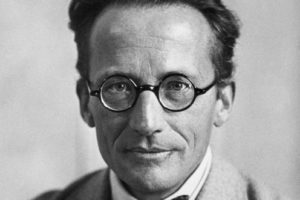
– Erwin Schrödinger
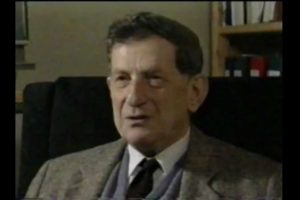
– Prof David Bohm
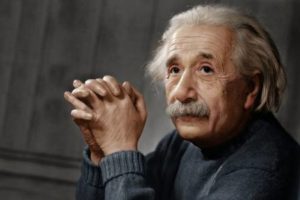
– Albert Einstein
Click on any event to view the recordings as well as event details